Article Summary
- State and Chicago officials gathered Tuesday for an event to reflect on the year since “Operation Midway Blitz” upended life for immigrant communities across the city.
- The event focused on the resilience of local communities, as well as a need for federal immigration enforcement agents to face accountability for alleged misconduct during the campaign.
- JB Pritzker told reporters at the event that the Illinois State Police’s investigation into the fatal shooting of a Chicago man has faced challenges securing evidence and testimony from federal officials.
This summary was written by the reporters and editors who worked on this story.
CHICAGO, Ill. (Capitol News Illinois) — State and local leaders joined immigrants’ rights advocates in Chicago’s Little Village neighborhood on Tuesday — the first day of Hispanic Heritage Month and the day before Mexican Independence Day — to reflect on the year since federal agents descended onto the city amid a targeted federal immigration enforcement campaign.
Four days after the official launch of the now-infamous “Operation Midway Blitz,” U.S. Immigration and Customs Enforcement agents fatally shot Silverio Villegas González, a Mexican citizen, in suburban Franklin Park after he dropped his two young sons off at school and daycare.
The operation stretched on through the winter, creating a city blanketed in fear, as many immigrant communities put their lives on hold — doctor’s appointments, school, jobs — for fear of encountering federal immigration agents.
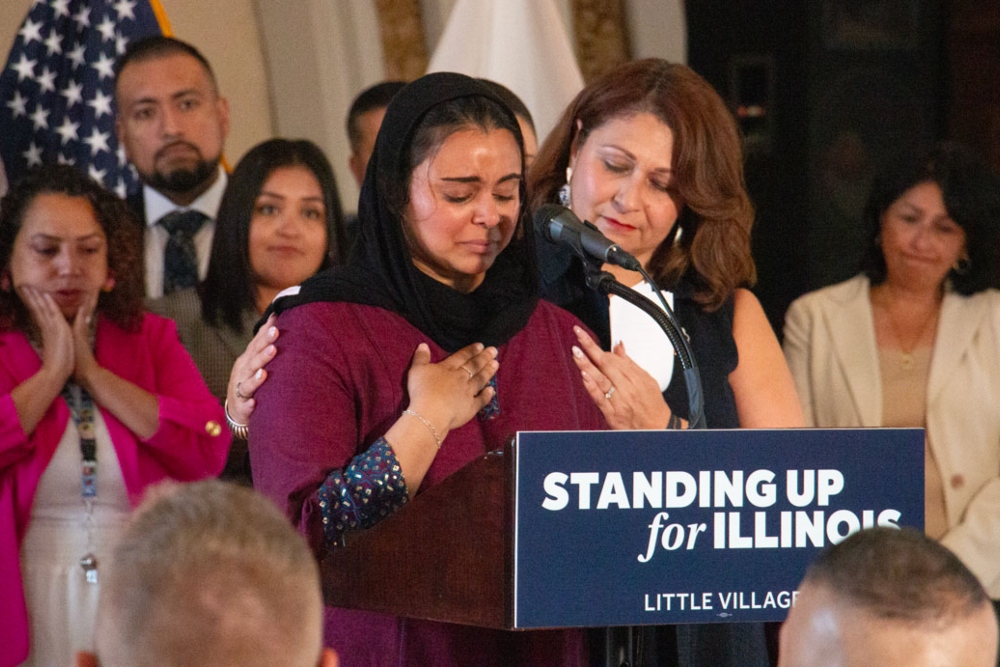
Rabia Amin’s life was upended by more than just fear last September, when her father Asif Amin Cheema was detained by federal agents on his way to work at the Humbolt Park sandwich shop, Best Sub 2, he had owned and operated for three decades.
“He worked, he provided for our family, and he built a business and a life in the community that he called home,” Amin said. “In a matter of seconds, that life was taken away from him.”
Amin said her father was hospitalized while in custody because of his treatment, before ultimately being deported to Pakistan in January, “as if the 30 years of sacrifice meant nothing.”
Her family has struggled with his separation and with trying to keep his business afloat. They are grieving, Amin said, but resilient. And, she said, they will continue fighting to demand accountability for what their family and others like them endured.
Gov. JB Pritzker echoed the calls for federal agents and Trump administration officials who carried out the campaign to be held to account.
“Accountability means documenting what happened, listening to people who experienced it. It means refusing to allow fear, misinformation, or the passage of time to erase the truth,” Pritzker said. “Let me say this to any agent or to any administration official who thinks that we’ve forgotten about their cruelty: it will not go unchecked. It will not. Illinois remembers what happened.”
Documenting the ‘Blitz’
Last October, Pritzker created the Illinois Accountability Commission to investigate alleged misconduct by federal agents and create a public record of the harm inflicted upon Illinoisans.
Commissioners heard testimony from medical experts and witnesses about agents’ use of chemical weapons against protestors and bystanders, from historians and legal scholars about the erosion of legitimacy caused by agent misconduct, and from families, medical doctors and educators about harms specific to children.
Read more: Felt like a ‘war zone’ | ‘A crisis for the nation’ | A city blanketed in fear | Abuses ‘greenlit by Washington’
They also heard testimony from Marimar Martinez, the Chicago teacher’s aide who survived being shot five times by border patrol agents last October, before eventually issuing a 204-page report with recommendations for accountability and harm reduction.
The commission, which did not have legal authority to subpoena records or compel testimony, collected evidence from body camera footage, security camera and social media videos, and interviews with witnesses for investigations into 16 major flashpoints between agents and the public.
Ultimately, the commission turned the evidence over to local law enforcement as referrals for prosecutions of agents it reasonably believed had broken the law.
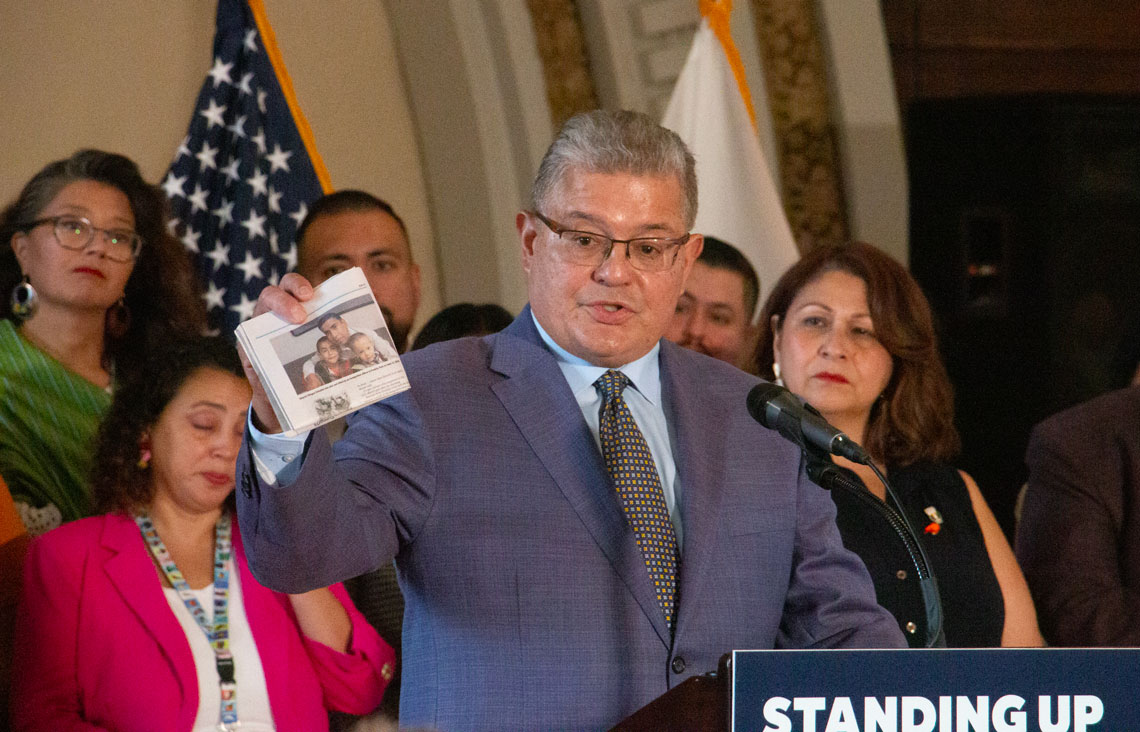
Retired U.S. District Judge Rubén Castillo led that commission, which he said made “tremendous inroads,” but also expressed frustration with the lack of prosecutions, particularly for the shootings of Villegas González and Martinez.
Castillo was part of a coalition that sought to appoint a special prosecutor to investigate alleged abuses by federal agents, in the absence of action by Cook County State’s Attorney Eileen O’Neill Burke.
Burke has argued that her office does not have the legal authority to initiate investigations without a request from law enforcement, and a judge sided with her in May, denying the petition for a special prosecutor.
‘Near impossible’ to investigate
Illinois State Police have been investigating the shooting of Villegas González after Franklin Park police officials requested help. A special ISP unit launched an investigation into the shooting in May.
Read more: Illinois State Police investigating fatal ICE shooting of Silverio Villegas González
But asked about it Tuesday, Pritzker said the investigation has faced challenges with obtaining enough evidence, and that federal officials have been uncooperative in turning over body camera footage or making agents available to testify.
Unlike the well-documented shooting of Martinez, Pritzker said fewer people were aware and walking around filming federal agents before Villegas González was killed.
“There is very little video. The video exists on body cameras of federal officials who were at that killing. They have not provided that to our investigators,” Pritzker said. “So, it makes it near impossible to complete an investigation when you know there’s evidence out there that you’re not able to receive because the Trump administration is unwilling to provide it.”
Read more: Judge rules to release evidence in Border Patrol shooting of Marimar Martinez | Marimar Martinez, Chicago woman shot and briefly charged by Border Patrol, moves to sue
State Sen. Celina Villanueva, D-Chicago, said the impact of Midway Blitz was personal to her. She said she saw residents, public officials and Chicago police officers teargassed by federal agents.
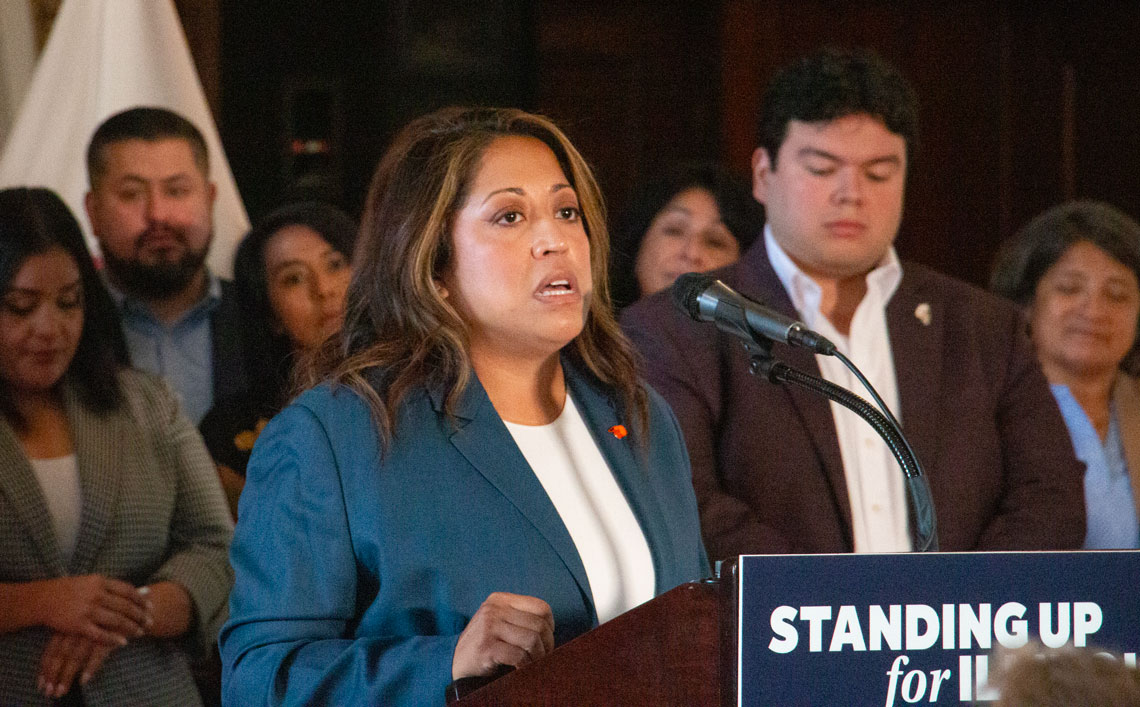
“I saw the vacant expressions that they had on their faces, because for them we weren’t human,” Villanueva said. “It wasn’t made for TV. It was real-life trauma. People were stolen from their families. People were killed.”
But despite that, she said she was proud of rapid responders and those who stood up to protest and protect their neighbors.
“While this administration was busy showing America why hate will never make us great, it was our communities that showed America why love, compassion, unity and strength will always win,” Villanueva said.
(Reporting by Maggie Dougherty, Capitol News Illinois)
Capitol News Illinois is a nonprofit, nonpartisan news service that distributes state government coverage to hundreds of news outlets statewide. It is funded primarily by the Illinois Press Foundation and the Robert R. McCormick Foundation.
This article first appeared on Capitol News Illinois and is republished here under a Creative Commons Attribution-NoDerivatives 4.0 International License.